Here’s a pitch email we’d never send:
Hi! I’m a fast-growing AI influencer with amazing engagement. I’d love to collab! Please send your rates and products. Thanks!
It’s not rude. It’s just about the sender, not the brand. It doesn’t say what the creator does, why this brand, what the post would look like, or that the creator is AI-generated (which the brand will find out anyway, and then wonder why it wasn’t mentioned).
This post is about writing the opposite of that email. You’ll get a pitch template you can copy, a short media kit checklist, a follow-up script, and our honest take on AI influencer brand deals: when they make sense, and how to keep them clean.
First, are you ready to pitch?
Brand deals are usually not the first income stream for a new AI creator. Before you start emailing, check:
- A clear niche. “Small-space plant care” beats “lifestyle.”
- A consistent character. Same face, same voice, every time. A brand needs to know who’ll show up.
- Posts that already look like ads would, minus the ad. If you’ve been naturally featuring linen throws and terracotta pots, a linen brand can picture the partnership.
- An engaged audience. People commenting, saving, asking where things are from. Size helps, but brands that know what they’re doing look at engagement.
- AI disclosure on everything. Bio, posts, website.
Not there yet? That’s fine. Spend a few more weeks on content and come back. Our pillar on how to make money with an AI influencer suggests a sensible order for the other income streams in the meantime.
Pick brands that already fit
The best pitch goes to a brand your audience already asks about.
Scroll your comments and DMs. Which products keep coming up? If you run a cozy-budget character like Alice, it might be a small candle shop or a rug brand your followers love. If you run a builder like Logan, maybe a hardware store’s own-brand tools or a wood stain company.
A quick shortlist method:
- List ten products you’ve featured or been asked about.
- Cross off any brand with a public policy against AI talent (check their creator or partnership pages).
- Circle the smaller ones. Small and mid-sized brands often reply to direct emails; giant ones usually work through agencies.
- Find a real contact: a partnerships email, a marketing lead, or the founder for tiny shops.
The pitch template
Copy it, then make it yours. Every bracket gets replaced with something specific. If you can’t fill a bracket, the brand probably isn’t a fit yet.
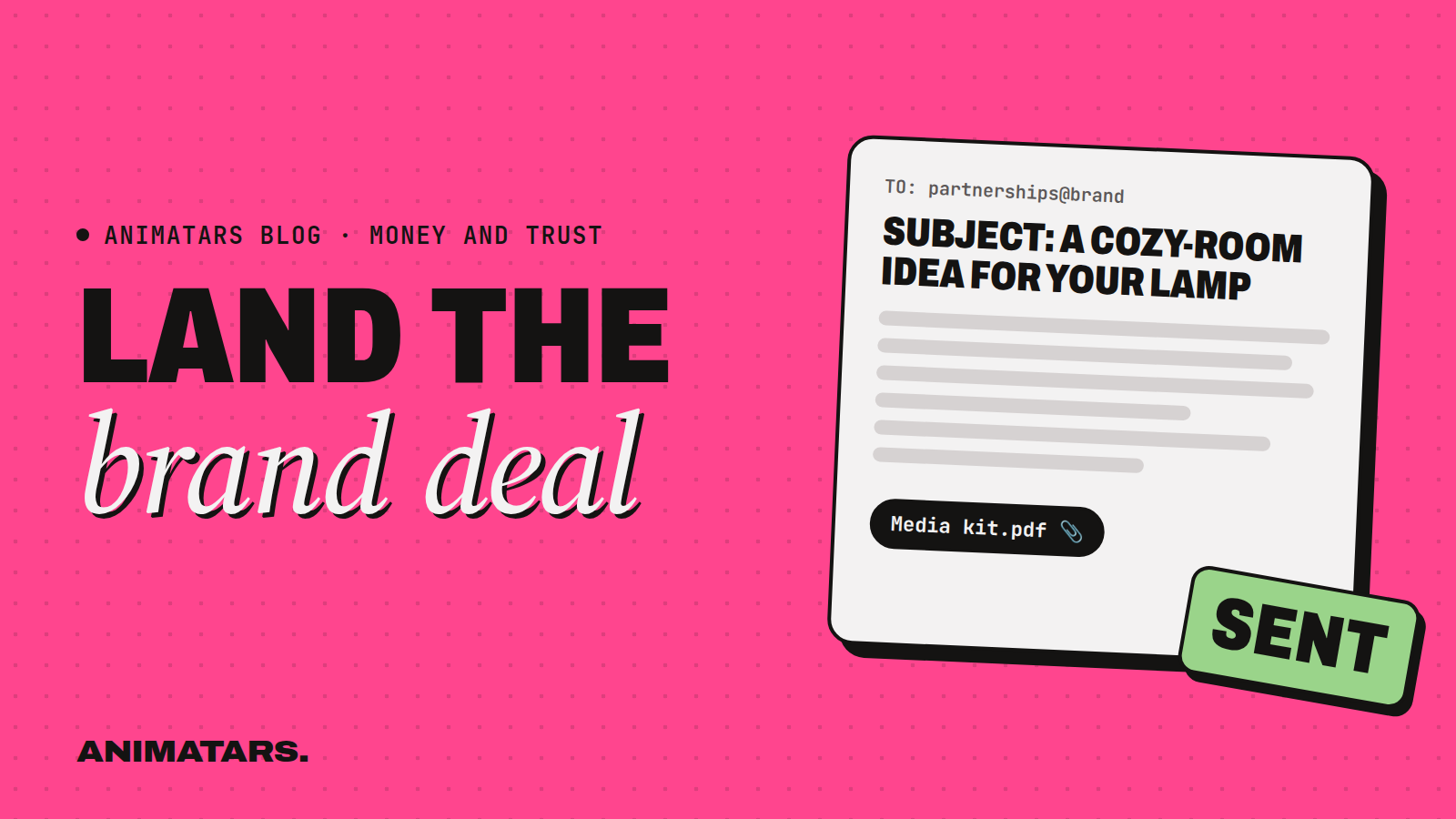
Subject: [Character name] x [Brand]: a [season/theme] idea for your [product]
Hi [first name],
I run [Character name], an AI-generated creator who shares [niche, in one line, e.g. “renter-friendly makeovers for small apartments”] on [platforms]. The character is clearly labeled as AI on every account, and I’m the person behind the content.
Our audience keeps asking about [specific product], most recently on [specific post]. So I had an idea:
[One-sentence concept, e.g. “A 30-second ‘balcony in a weekend’ video where your outdoor rug anchors the whole makeover, with a shopping list in the caption.”]
A few posts that show the style: [link], [link], [link].
Everything would be disclosed as a paid partnership using the platform’s tools and in the caption, and the AI-generated content labeled as such. Happy to share our media kit or adjust the idea to fit what you’re working on.
Would a quick reply with your thoughts work?
[Your name] [Character name] · [website]
Why this works
- The AI part is in the second sentence. No surprises later. Brands that don’t want AI talent can bow out quickly, which saves everyone time.
- It proves fit with the audience’s own questions. That’s more convincing than any adjective.
- It offers one concrete idea. Brands can picture it, tweak it, or forward it.
- It handles disclosure before they ask. That signals you’re a safe partner.
- It’s short. Someone can read it on a phone between meetings.
Your one-page media kit
You don’t need a glossy 20-page deck. One or two pages, made in Canva, covering:
- Who the character is: name, look, personality in two lines, and a clear “AI-generated creator” statement.
- Who’s behind it: you or your studio, and how you work.
- The niche and the audience: what they come for, and what they ask about.
- Best work: three to five posts, with links.
- What you offer: short video, carousel, newsletter mention, a feature on your website.
- How you disclose: paid partnership labels, AI labels, plain-language captions.
- Contact.
If you have real performance numbers from your own accounts, you can include them. Don’t round up, don’t guess, and don’t borrow anyone else’s.
The follow-up script
People are busy. One polite follow-up is normal. Wait about a week, then reply to your own email:
Hi [first name], just bumping this in case it got buried. Still happy to tailor the idea, or to try a smaller test post first. Either way, thanks for reading!
If there’s still no reply, let it go and pitch the next one. No third email.
When they say yes
Celebrate briefly, then get it in writing. Even a simple email agreement should cover:
- Deliverables: how many posts, which platforms, which formats.
- Timeline: draft date, posting date.
- Approval: whether they review before posting, and how many rounds.
- Usage: can they reuse your content in their own ads? For how long?
- Payment: amount, timing, and whether products are included.
- Disclosure: confirm you’ll use paid partnership labels and AI labels.
If a brand asks you to hide the AI or skip the sponsorship label, that’s your sign to walk away. It puts your accounts and reputation at risk, and the FTC expects paid partnerships to be disclosed. Rules and platform settings change, so check the current ones before each campaign. We cover the how in How to Label AI Content.
What to charge
We won’t give you a rate card, because any number we gave would be made up. Pricing depends on your niche, your engagement, the work involved and the usage rights.
A few honest principles:
- Price the work as well as the reach. A full makeover video with a shopping list is more work than a single photo.
- Charge more for usage rights. If they run your content as an ad, that’s extra value.
- Product-only deals are fine early on if you’d genuinely feature the product anyway. Don’t make it a habit.
And plainly: brand deals are irregular. Some months you’ll have two, some months none. Results vary, nothing is guaranteed, and they work best alongside affiliate links and your own products.
FAQ
Do brands work with AI influencers?
Some do and some don’t. Policies vary by brand, so say upfront that your creator is AI-generated and let them decide. The ones who say yes will be better partners.
How do I pitch a brand as a small creator?
Pick brands that already fit your content, send a short personal email with one specific post idea, show a few examples, and make it easy to say yes.
What should be in a media kit for an AI creator?
Who the character is, a clear AI disclosure, your niche and audience, a few of your best posts, the formats you offer, and how to contact you. One or two pages is plenty.
How do I disclose a sponsored post from an AI creator?
Use the platform’s paid partnership tools where available and say it plainly in the caption. Label the AI content too. Check each platform’s current settings and FTC guidance.
Send one this week
Pick the brand your followers ask about most, fill in the template, and send it. One email. That’s today’s homework.
Want a studio behind your character, from the character bible to the website brands land on when they check you out? Join the beta.