Let’s get the disappointing part out of the way first.
There’s no secret switch. Nobody can promise you an income from an AI creator, and if someone does, close the tab. What you can do is build a character people find useful, give them a home you own, and stack a few income streams on top. Some will work for you. Some won’t. Results vary, and that’s the honest truth.
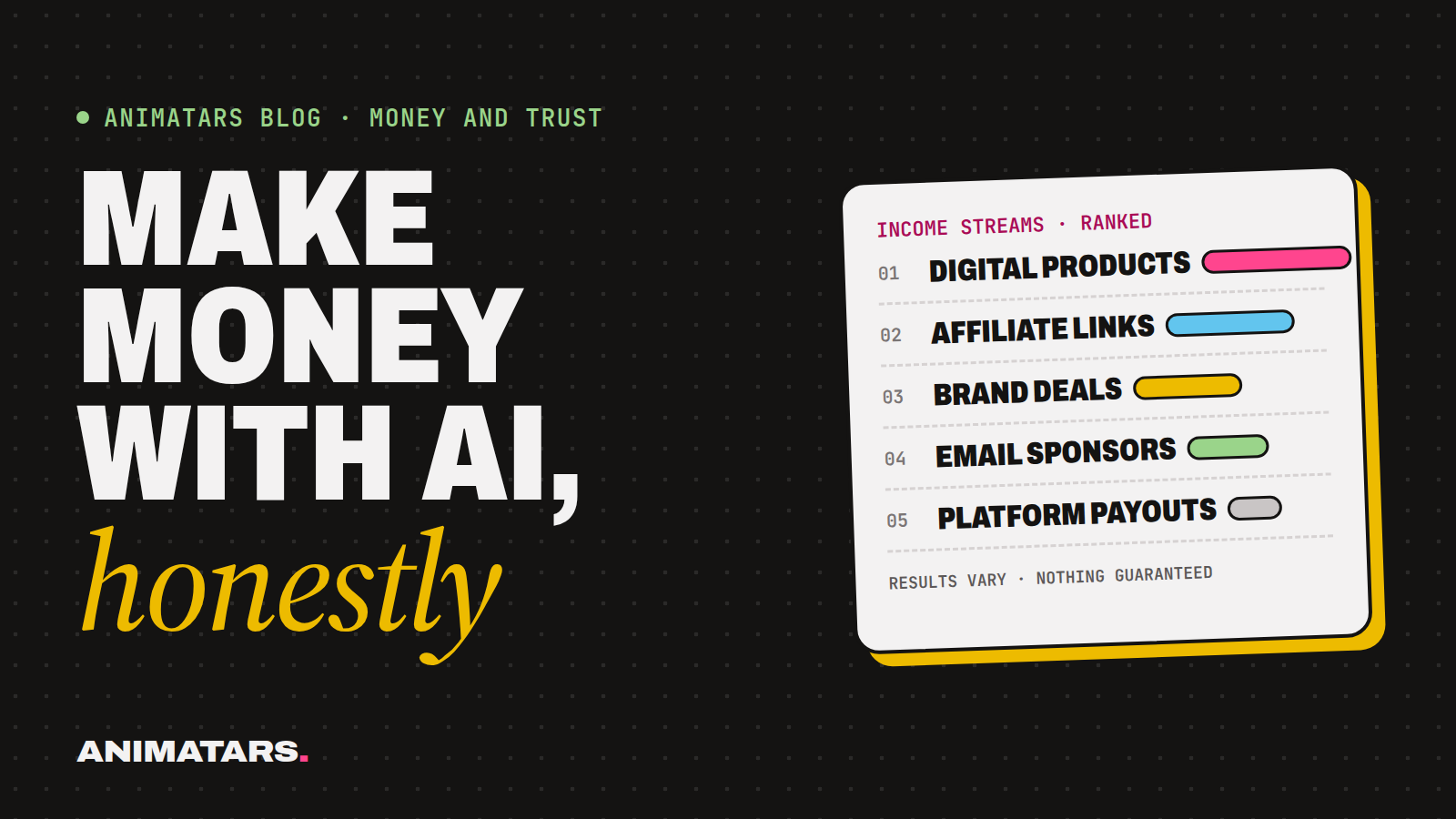
Now the fun part. We build AI creators for a living, and we’ve thought hard about how they earn. Below, we rank seven ways to make money with an AI influencer, from “start here” to “probably skip,” with what each needs before it pays.
How we ranked them
Each income stream gets scored on three things:
- Control: can a platform change the rules and take it away?
- Audience needed: how big and engaged do you need to be before it works?
- Fit for AI creators: does being a disclosed AI character help, hurt or not matter?
Pure follower count isn’t on the list. A small, trusting audience that clicks your links beats a big one that scrolls past.
The ranking
1. Your email list (the multiplier)
Not technically income on its own, which is why it’s first. Every other stream here works better when you can reach people directly. A platform can bury your post; it can’t bury your email.
- Control: high. You own the list.
- Audience needed: none to start.
- Fit for AI creators: great. People subscribe for the tips, not the face.
Start one before you think you need it. Tools like Kit, Beehiiv or MailerLite all work. Here’s why your followers aren’t really yours if you need convincing.
2. Digital products
Printables, planners, shopping lists, templates, prompt packs. Small things that solve one problem.
- Control: high, especially sold from your own site.
- Audience needed: small, if they trust you.
- Fit for AI creators: excellent. A disclosed AI character can absolutely sell a “Boho Balcony Shopping List” if the list is good.
Example: a plant-and-patio character like Claudia gets the same “where’s that rug from?” question under every makeover. That’s a product. We walk through it step by step in How to Sell Digital Products as a Creator.
3. Affiliate links
You recommend products you’d genuinely point people to and earn a commission when they buy through your link.
- Control: medium. Programs change terms.
- Audience needed: small to medium.
- Fit for AI creators: good, with one catch: your character didn’t physically use the lamp. Be honest about what was tested, by whom, and how.
Every affiliate link needs a clear disclosure. Our beginner’s affiliate playbook covers how to do that without sounding like a legal notice.
4. Brand deals
A brand pays your character to feature their product.
- Control: low to medium. One deal at a time.
- Audience needed: medium, and engagement matters more than size.
- Fit for AI creators: mixed. Some brands love working with a consistent, always-on-brand character. Others have policies against AI talent. Be upfront in the first email.
Paid partnerships must be disclosed, both with the platform’s own partnership tools and in plain words. We share a pitch template in How AI Creators Land Brand Deals.
5. Platform payouts
Creator funds, ad revenue sharing, bonuses.
- Control: low. Rules and eligibility change, and AI content policies are still evolving.
- Audience needed: usually a threshold you have to meet first.
- Fit for AI creators: depends on the platform and how you label your content. Check the current rules for each one.
Nice when it arrives. Don’t build your plans around it.
6. Services built on your skill
Once you’ve built a character that works, other people may want help building theirs: prompt writing, character design, video editing.
- Control: high.
- Audience needed: small but specific.
- Fit for AI creators: the character is your portfolio.
This is less “AI influencer income” and more “you learned a skill.” Still counts.
7. Anything that relies on hiding the AI (skip it)
Fake testimonials. Pretending the character is a real person. Undisclosed sponsored posts. We put this on the list so we can cross it out. It risks your accounts, your reputation and the trust of everyone who follows you. Not worth it at any price.
A sample plan for your first few months
Here’s a starting order, not a schedule with promises attached.
Month one: build the home.
- Write a character bible so your creator looks and sounds the same every time.
- Post consistently with clear AI labels.
- Set up an email list with a simple freebie.
Month two: earn trust.
- Answer comments. Notice repeated questions.
- Add a few honest affiliate picks where they genuinely fit.
Month three: make one small thing.
- Turn your most-asked question into a low-priced PDF.
- Tell your email list first.
After that: add, don’t switch.
- If engagement is solid, start pitching a few brands that fit your niche.
- Keep everything pointing back to your own site.
Our creator Claudia reached 582K+ followers and 100M+ views across platforms in 90 days, with zero real faces shown. We’re proud of that, and we’ll repeat the important bit: it’s one creator’s result. Yours may be bigger, smaller or very different. Nothing here is guaranteed.
What actually moves the needle
When we look at what separates AI creators that earn from ones that stall, it’s rarely the tools. It’s:
- Usefulness. Every post teaches, shows or solves something. A $40 headboard tutorial beats a pretty portrait.
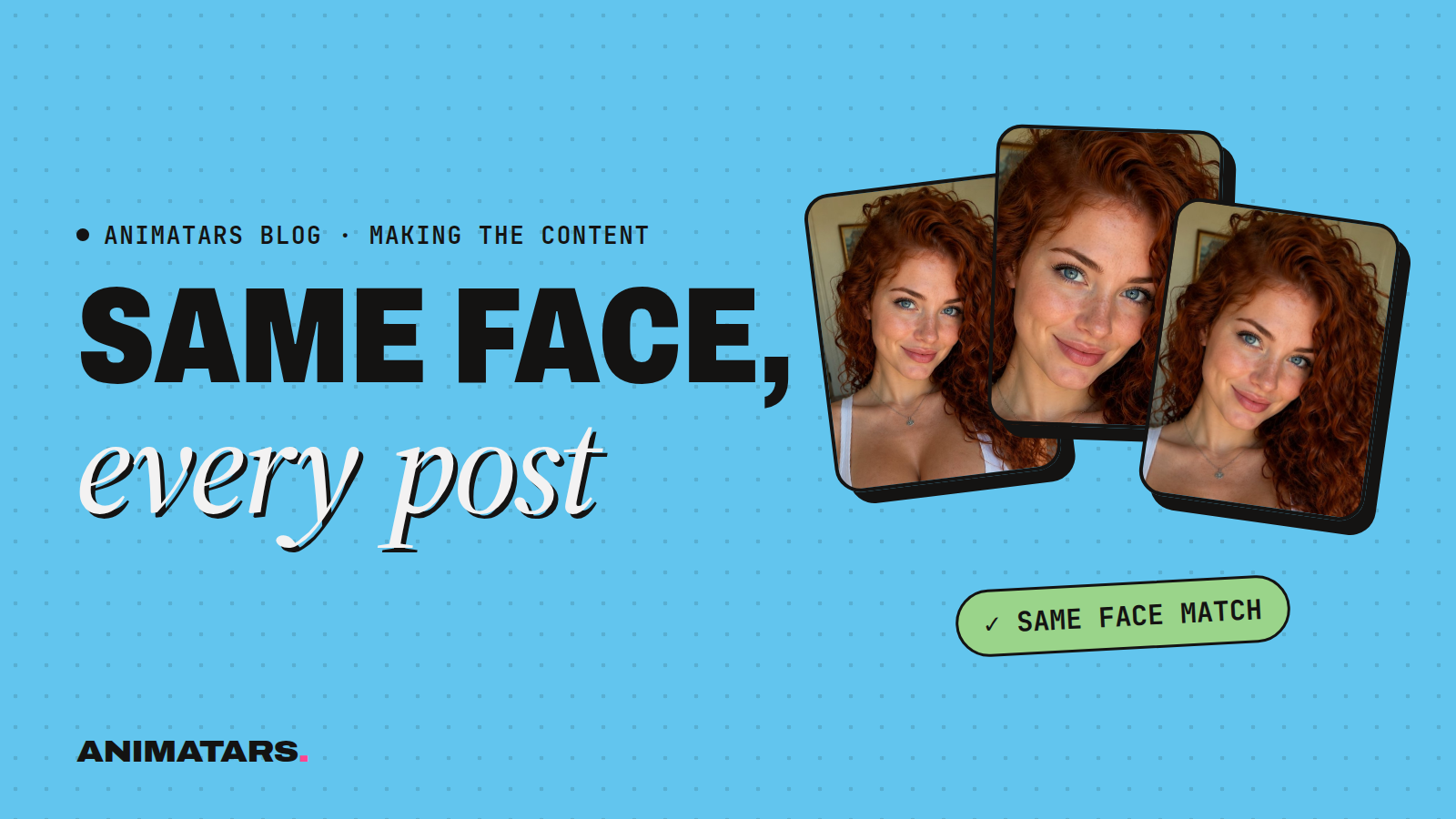
- Consistency. Same face, same voice, same posting rhythm.
- A clear niche. “Renter-friendly calm” (hello, Willow) is easier to monetize than “lifestyle.”
- Honesty. Disclosing the AI, disclosing the ads, disclosing the affiliate links. See our guide to labeling AI content.
- Ownership. A website and an email list, so a platform change is a bad week, not the end.
A worked example (hypothetical numbers)
Say your character has 2,000 people on an email list, and you send a weekly tip with one affiliate pick. A small number click, fewer buy. Then you release a $9 printable and some of your most engaged readers grab it. Later, a small decor brand that likes your style asks about a sponsored post.
None of those alone is big. Together, they start to look like something. That’s how most creator income works: a few streams, stacked, built on trust. And again, the numbers here are made up to show the shape, not to predict yours.
FAQ
Can you really make money with an AI influencer?
Some creators do, through products, affiliate links, brand deals and more. Many don’t. Results vary widely and depend on your niche, consistency, usefulness and honesty. Nothing is guaranteed.
How long does it take to monetize an AI influencer?
There’s no reliable timeline. Platform payouts usually require eligibility thresholds, and brand deals need an engaged audience. An email list started early gives you options sooner.
Do I have to disclose that my influencer is AI?
You should, clearly and everywhere the character appears. Platforms offer ways to label AI-generated content, and paid partnerships and affiliate links also need disclosure under FTC expectations. Check current rules, since they change.
What is the best first income stream for an AI creator?
For most niches, affiliate links and a small digital product. They need less audience than brand deals and teach you what your followers actually want.
Build it on ground you own
If this all sounds like a lot to wire together, that’s exactly what we’re building at Animatars: a studio to design your character, launch the accounts, grow the audience, then put it on your own site with an email list and a store. It’s in beta, and we’re building it with early members. Join the beta.